Topic
Attention and thinking for yourself
Long before the smartphone, five writers worried about what too much input does to a mind, and what it takes to think for yourself.
One thing at a time
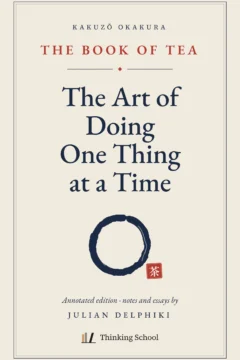
Okakura’s The Book of Tea (1906) uses the tea ceremony to describe attention given wholly to one thing. Our edition’s essays take it to multitasking, silence and the forty-seven seconds we manage on one screen.
The overstimulated city
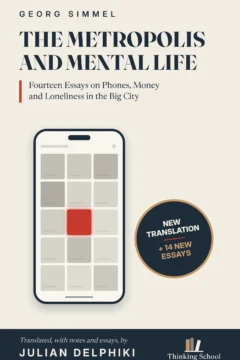
Georg Simmel argued in 1903 that the swift change of impressions in the big city produces the blasé attitude, an indifference to differences. Read it with a phone in your hand. See the lecture explained.
Reading and thinking
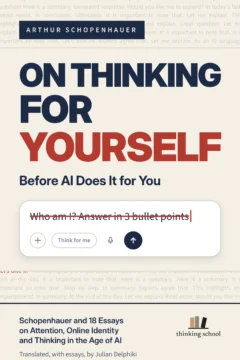
Arthur Schopenhauer warned in 1851 that reading means thinking with someone else’s head. Our edition asks what he would say about AI that finishes our thoughts. See the essay explained.
Opinions that are your own
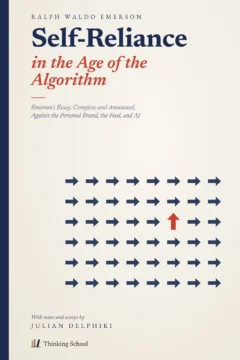
Ralph Waldo Emerson’s “Self-Reliance” (1841) is the most quoted essay against conformity and among the least read in full. Our edition sets it against the feed that thinks like everyone and the personal brand. See the case against it.
Reputation at work
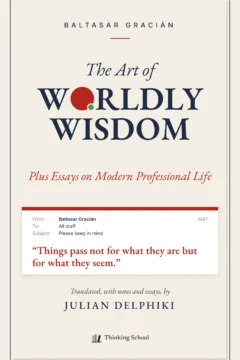
Baltasar Gracián’s Oráculo manual (1647) describes attention from the other side: how to manage what others see of you. “Things pass not for what they are but for what they seem.”
Where to start
If you have an evening, Schopenhauer; a weekend, Emerson and Okakura; for discussion, the reading guides on each book page.
Every book in the catalogue is sold as a printable PDF and on Amazon. Browse the catalogue