Topic
Solitude and home
Two writers, four centuries and half a world apart, withdrew from public life and wrote about the room they withdrew to.
The back shop
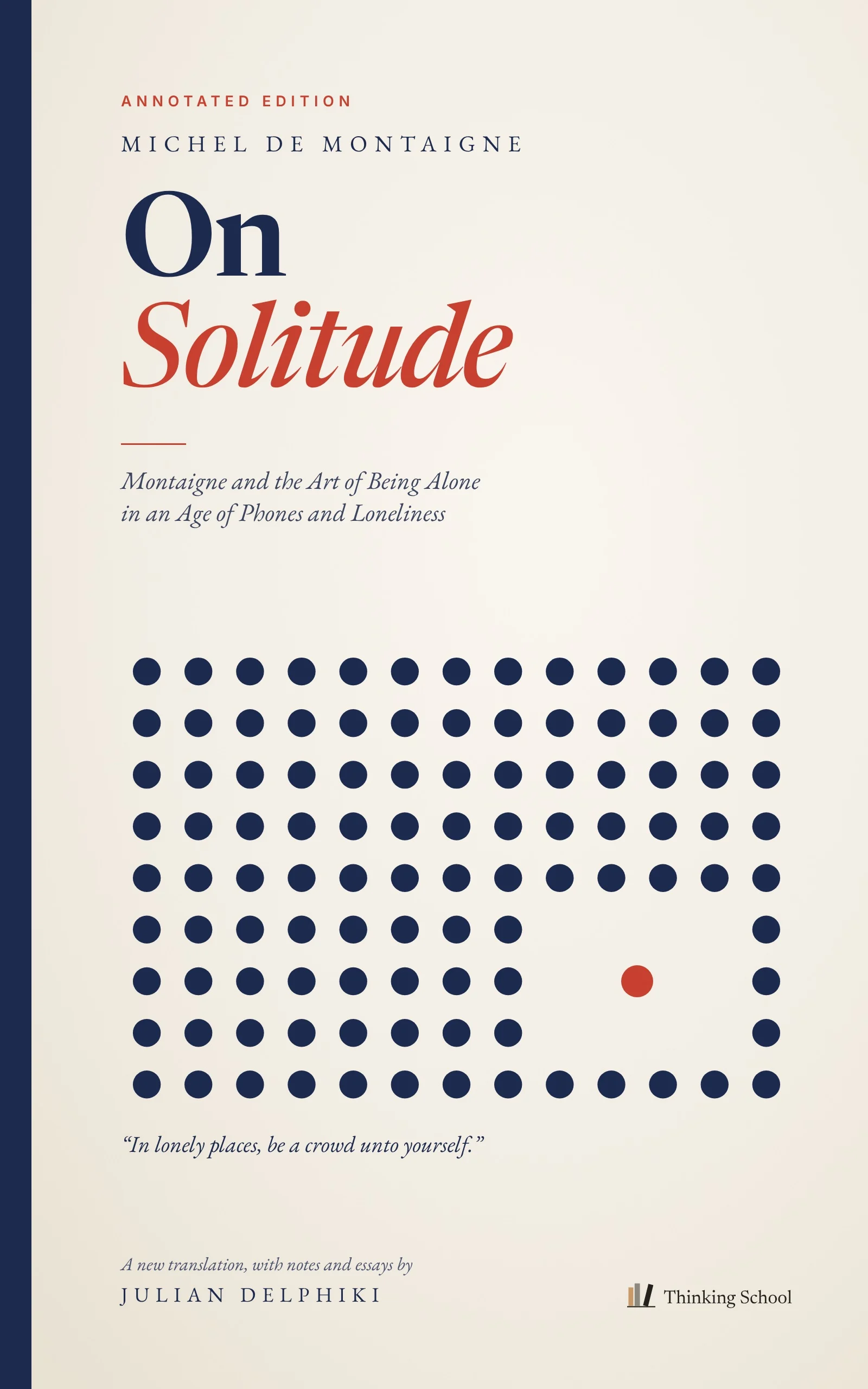
In 1571 Michel de Montaigne retired to a round tower with about a thousand books. In “On Solitude” he argues that leaving the city is not enough; we must keep a back shop all our own, a room inside ourselves where we can be free even with the shop open. “The greatest thing in the world is to know how to belong to oneself.” Our edition’s thirteen essays separate the solitude we choose from the loneliness that happens to us, and take the question to remote work, phones, companion chatbots, grief and old age. See the study guide.
The ten-foot hut
In 1212 Kamo no Chōmei finished Hōjōki in a hut three metres square on a mountain outside Kyoto, after watching fire, famine and earthquake destroy the capital. It is a book about impermanence and, our edition argues, the first book about housing. See Hōjōki explained.
Chosen or imposed
Both writers could afford to withdraw, and both doubted themselves. Montaigne spent much of his remaining life serving others; Chōmei ends by asking whether attachment to his hut is still attachment. Read them together with one question: is your solitude chosen or imposed?
Also on this subject
Thoreau’s cabin at Walden, discussed on our Thoreau pages, and Simmel’s city dweller, alone in the crowd.
Every book in the catalogue is sold as a printable PDF and on Amazon. Browse the catalogue