Topic
Work and free time
Why do we still work so much, when we are so much richer than our grandparents? Six writers asked the question over a century and a half, from very different places, and none of them agreed on the answer.
Four Victorians and a radical
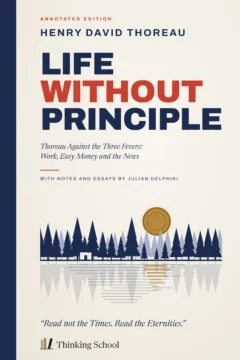
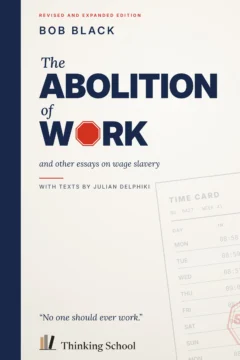
In 1854 Henry David Thoreau told a paying audience that nearly every way of getting money leads downward; his lecture became “Life Without Principle”. In 1877 Robert Louis Stevenson, a lawyer who never practised, defended idlers who do a great deal nobody counts as work. In 1884 William Morris weighed work on a pair of scales: hope of rest, hope of product, hope of pleasure in the work itself. In 1891 Oscar Wilde asked machines to do the ugly work so that people could become themselves. A century later Bob Black went further than any of them: The Abolition of Work argues that no one should ever work, in the sense of compulsory, supervised toil.
The forecast with a date
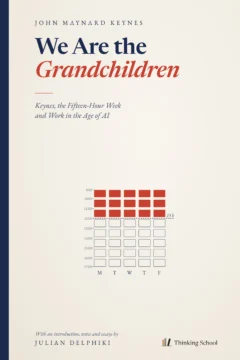
In 1930 John Maynard Keynes put numbers on the question: by 2030 we would be four to eight times richer and need to work about fifteen hours a week. He was nearly right about the wealth and badly wrong about the hours. Our edition, We Are the Grandchildren, asks why, and finds five leaks through which the time we gained escaped: efficiency spent on producing more, services that keep getting dearer, the fear of losing a job, status, and what we choose to measure. See Was Keynes right?
Read them together
The six disagree on almost everything except one point: more work is not always better work. Start with Keynes for the numbers, Morris for a test you can apply to your own job, Stevenson for the guilt of resting, and Thoreau for what you sell your hours for. Each edition has a reading guide, and several have study guides: Keynes, Morris, Stevenson, Thoreau.
The objections
Every edition ends with counterpoints, because the case against these writers is strong: work protects people, as unemployment research shows; most of them wrote from privilege; and progress did shorten the working week more than they expected. Read the case against Wilde, idleness as privilege and the case against Thoreau.
Every book in the catalogue is sold as a printable PDF and on Amazon. Browse the catalogue